
Lee T. Edwards
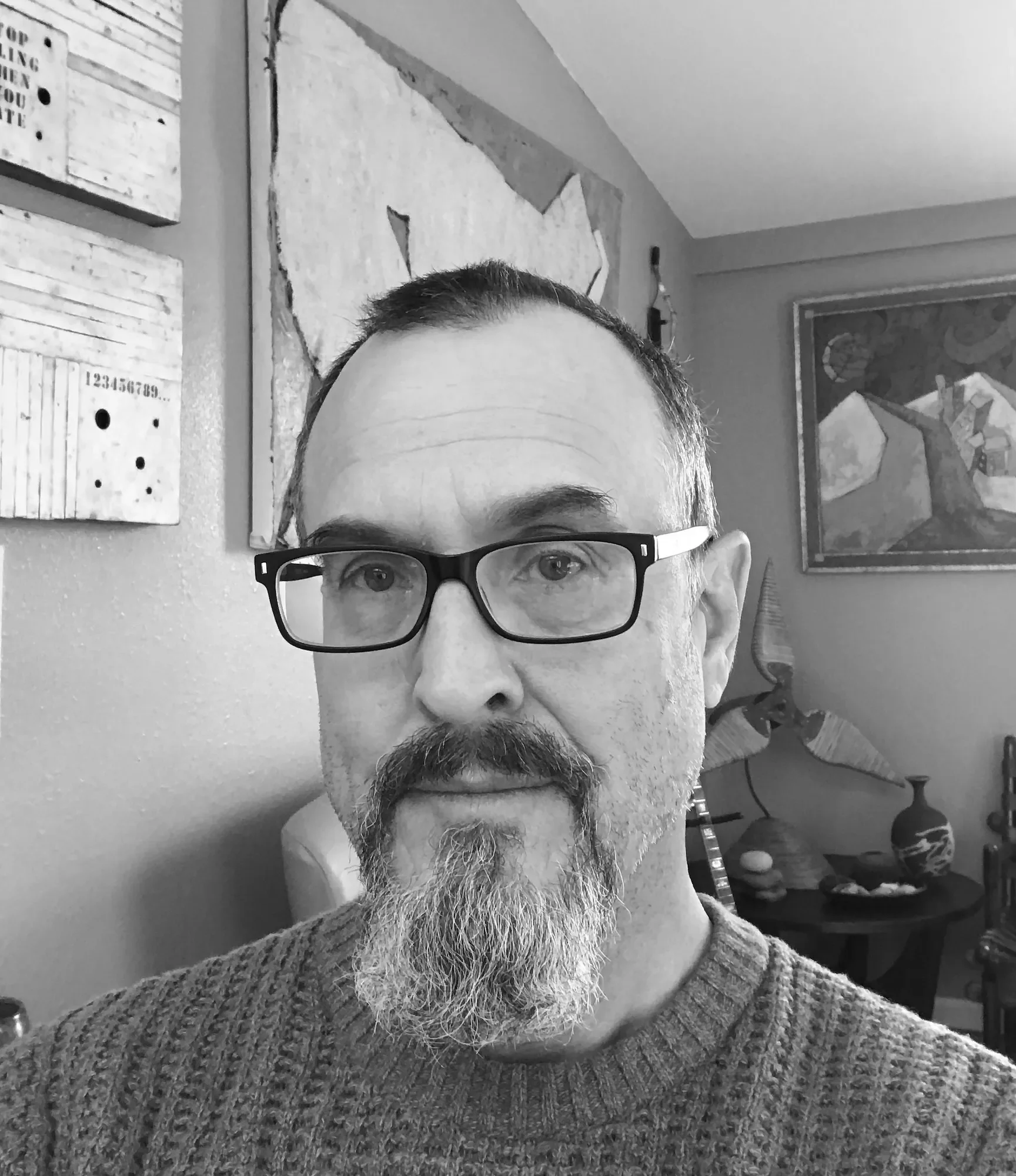
“Overall, I hope to make objects that are expressive, that compel the viewer to feel and to ponder.”
BIOGRAPHY
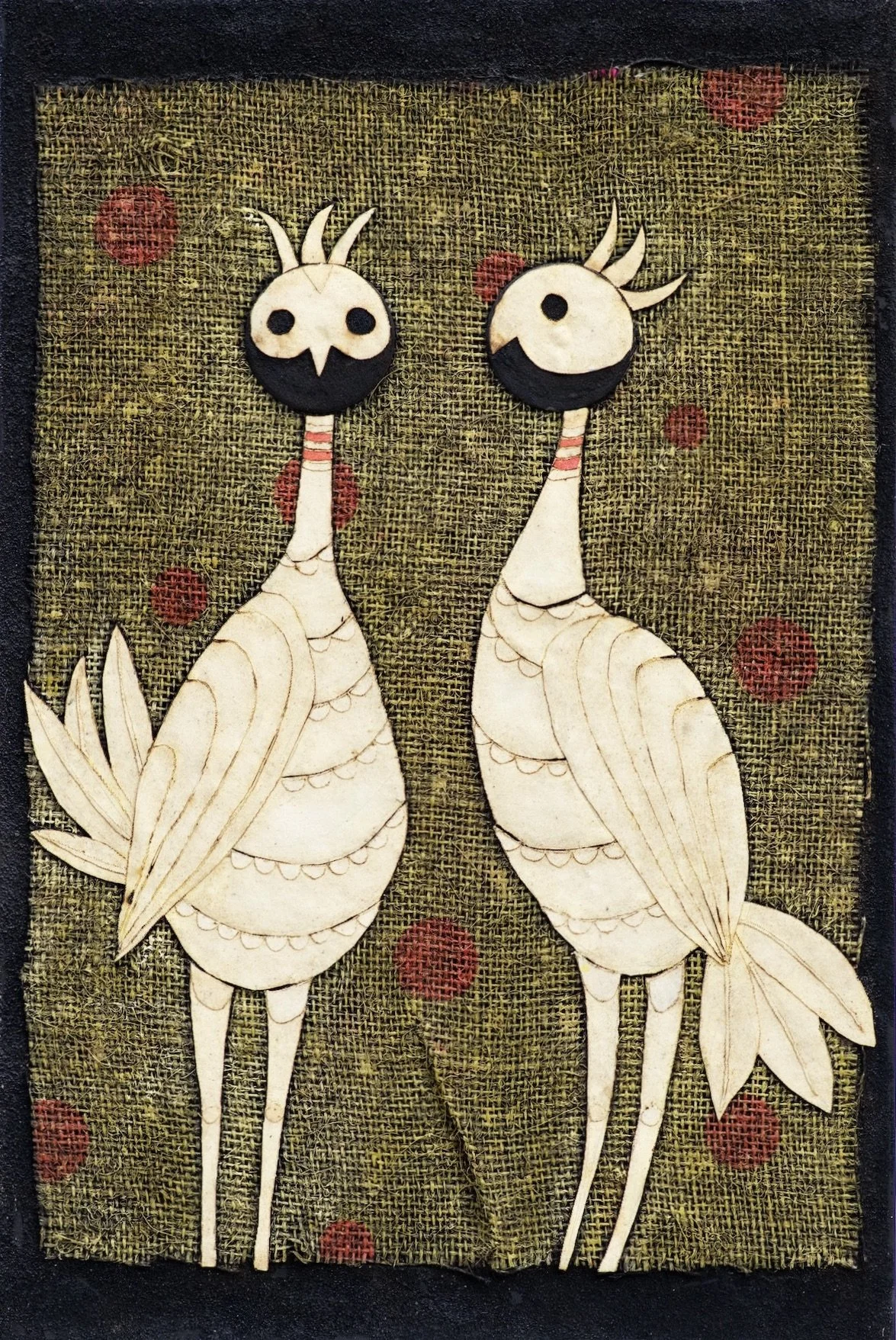
Lee Edwards, a psychologist by profession, is a self taught artist who has been making art in earnest since 1990. Art making is part of Edwards’ heritage. His maternal grandmother was a well-known mid-century Ecuadorian sculptor. Her work was imbued with social commentary and addressed such topics as history and tradition, the role of women in society, the travails of the poor and the marginalized, etc. Edwards’ artwork, especially the body of work that began in 2016, embraces the heritage of social commentary via art-making. Sometimes that commentary is overt, expressed in the content and titling of the piece. At times his work is mostly expressive, evocative, with social commentary as a quiet subtext. Often his work involves the tension between the organic and the industrial. Some of Edwards’ most creative moments emerge from interactions with materials. Ideas seem to bounce from the shapes, textures, and colors of the aged and found items he prefers. Ecology has become an important facet of Edwards’ work. He likes to think of using found or “at hand” materials as creative recycling, with the subtext that there is beauty and usefulness to be found in almost any object or material. Edwards finds works of blended media to be especially lively. There is a synergy in such work that invites the eye to dance from facet to facet, texture to color, shape to material, detail to gestalt, and so on. The dancing eye mimics the activity of REM sleep, an active mental state in which the dreamer (viewer) experiences a stream of images, thoughts and feelings. Edwards hopes to elicit a similar dynamic, for the viewing experience to be a resonant emotional encounter with any attendant meaning or interpretation emerging spontaneously. Overall, Edwards hopes to make objects that are expressive, that compel the viewer to feel and to ponder.
ARTIST INSIGHTS
How are your background and life experiences connected to your art?
Edwards' maternal grandmother was a well-known mid-century Ecuadorian sculptor. Her work was imbued with social commentary. Her social consciousness and artistic expression are bedrock for Edwards' art practice. His mother was a lifelong social activist and social worker by profession, and his maternal uncle is a physician in Ecuador whose scholarly work centers on issues related to the health and wellness of indigenous peoples. Edwards' own work as a psychologist is an outgrowth of his family's social consciousness and provides the backdrop for much of his art making.
Who are some of your biggest artistic influences?
Edwards' early artistic influences were mostly mid century Latin American artists to whom he was exposed via his maternal grandmother's art making, collaboration and collection. Eduardo Kingman and Oswaldo Guayasimin were two primary and early influences. The work of Jasper Johns, Henry Moore, Constantin Brǎncusi, Lee Bontecou, Louise Bourgeois, and James Serls also have been rich sources of influence and inspiration.
How have you developed your artist career?
I have always been a drawer and doodler but started making art in earnest in 1990. Art making is a central part of my life and I seek opportunities to engage the art community and to exhibit work whenever I can. I have had gallery and museum exhibitions and participate in local art festivals and events. I share as much of my work as possible on my website (leetedwardsart.com) and instagram site (@leetedwards).
What does your artistic work intend to communicate to its audience?
I tend to gravitate toward textural and sculptural work and I think that lends to an emotionally evocative experience. Sometimes my work is mostly expressive, with social commentary as a quiet subtext. Other times the social commentary is more overt in the title and the work itself. I find work of blended media especially interesting. There is a synergy in such work that invites the eye to dance from facet to facet, texture to color, shape to material, detail to gestalt, etc. The dancing eye mimics the activity of REM sleep, an active mental state in which the dreamer (viewer) experiences a stream of images, thoughts and feelings. I hope to elicit a similar dynamic, for the viewing experience to be a resonant emotional encounter with attendant meaning or interpretation emerging spontaneously.
Does your work comment on any current social or political issues?
My work always has had at least a backdrop of social commentary and the human experience. Over the past ten years my work has become a more overt form of commentary and has become a way to metabolize my own feelings about social and political issues.
Do you have a particular story that stands out from your career as an artist?
Sales and exhibitions are always a form of validation and appreciation. One story, though, tickles me quite a bit. I was setting up a sculpture for an annual exhibition at the Austin City Hall (The Peoples Gallery) and a fellow artist was looking at my piece and she said, "I think I want to make out with it." That seemed a high complement.
What is one thing you would like your audience to know about you?
I am a sensitive soul and have been described as sometimes too earnest. I think I have a strong moral compass though, and I'd like that to be reflected in my work and my daily life.
Which current art world trends are you following?
That is a tough question. I have to say I lean toward the material world and am especially fond of mid-century work. So modern trends tend to elude me. I like to see the hand of the artist so I don't respond too favorably to work that is too perfect, too technical, too digitized.
Why have you chosen to sell your work in the 1515 Lincoln Gallery?
I have been looking for regional locations to exhibit my work. A good friend of mine lives in OKC (my family lives in Edmond) and she encouraged me to check out 1515 Lincoln Gallery. I looked online and really liked the space, the salon atmosphere, and the wide variety of artists represented.
What do you believe makes 1515 Lincoln Gallery distinct from other galleries?
I like the salon atmosphere, the lovely and historical space, and the wide range of artists represented at 1515.
ARTIST STATEMENT
Lee Edwards makes 2- and 3-dimensional artwork with a preference for using found or scavenged materials. Much of his work is imbued with social commentary but overall he hopes to make the viewing experience a resonant and evocative encounter with any attendant meaning or interpretation emerging spontaneously for the viewer.
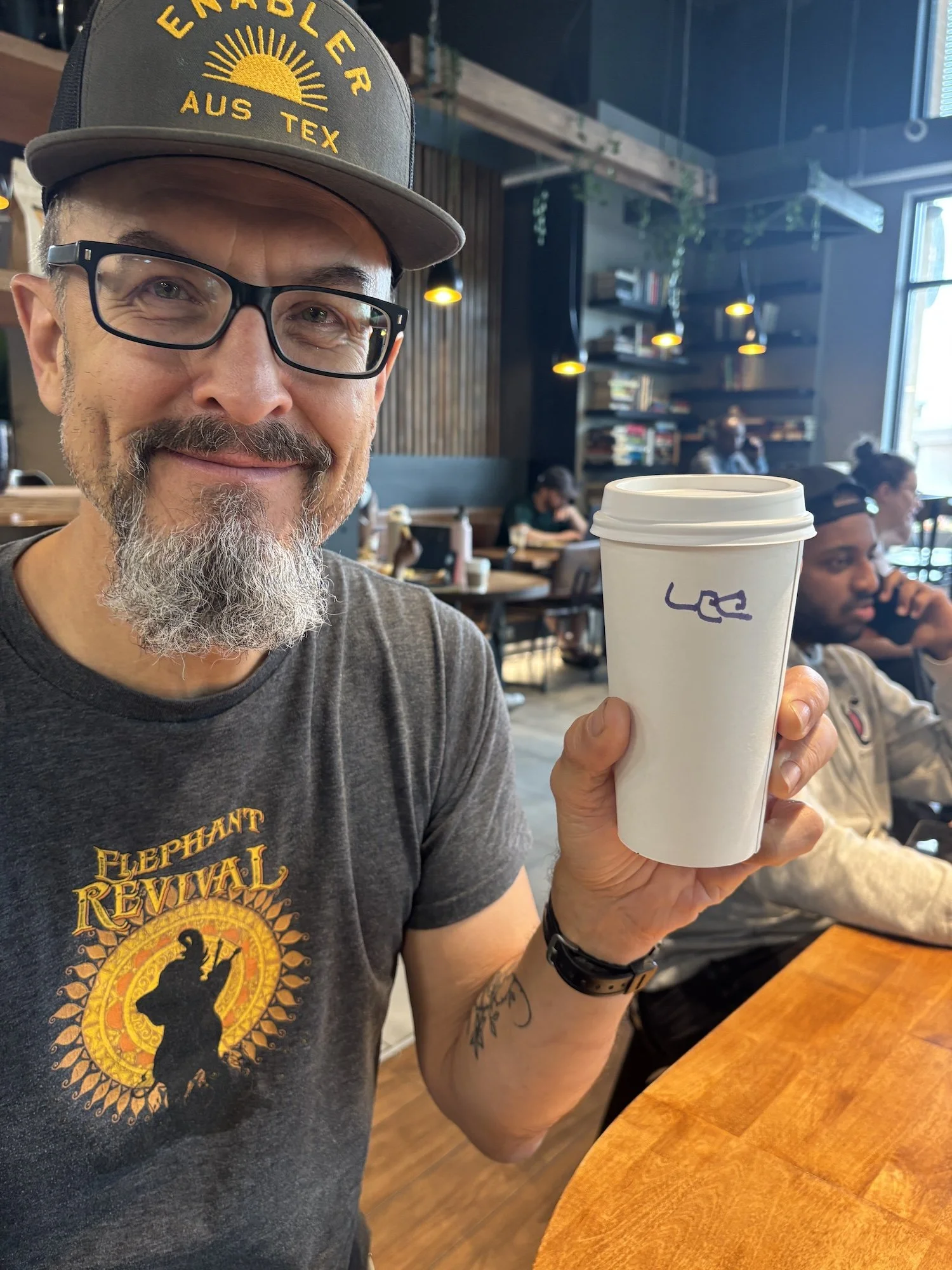
Lee T. Edwards
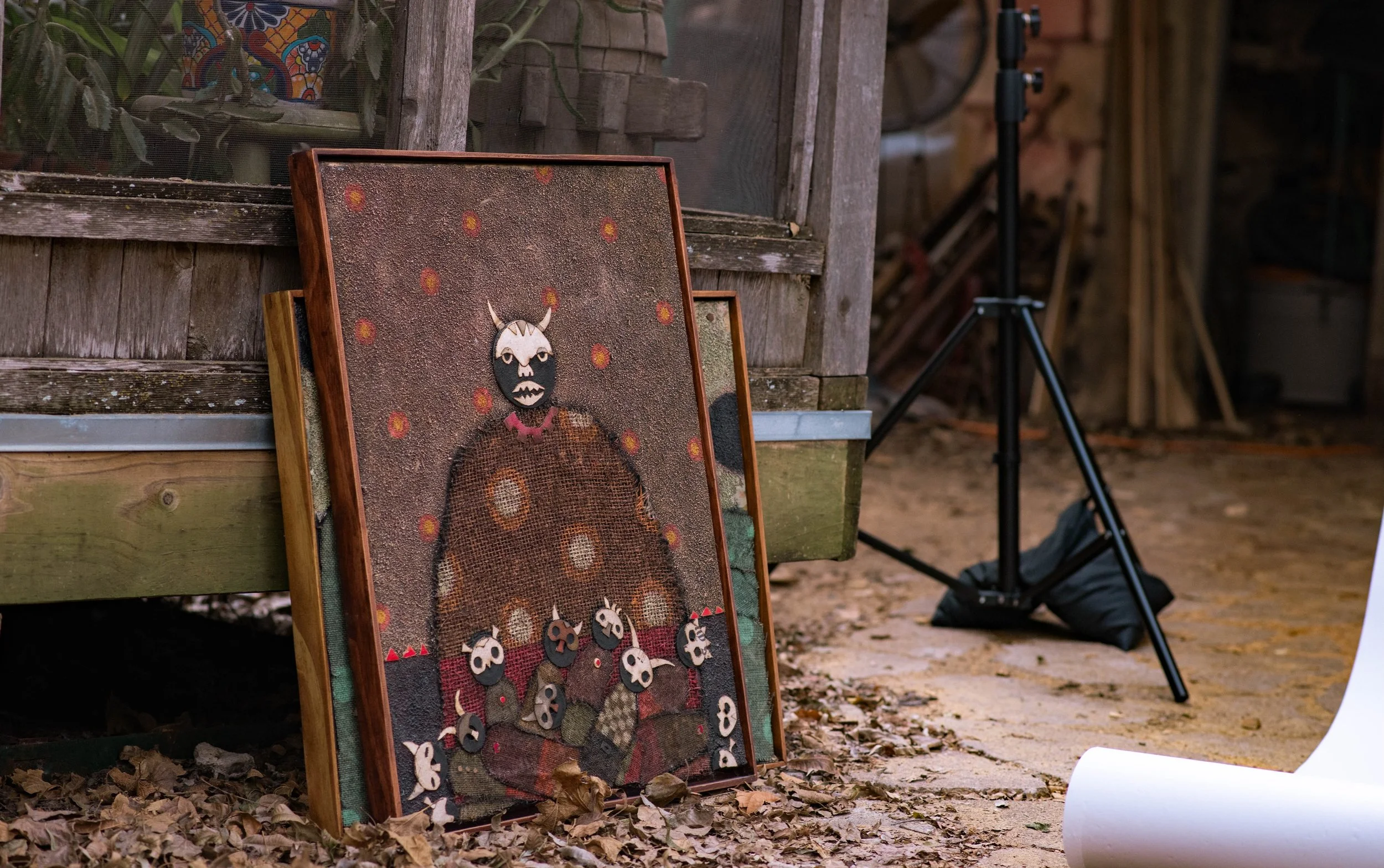
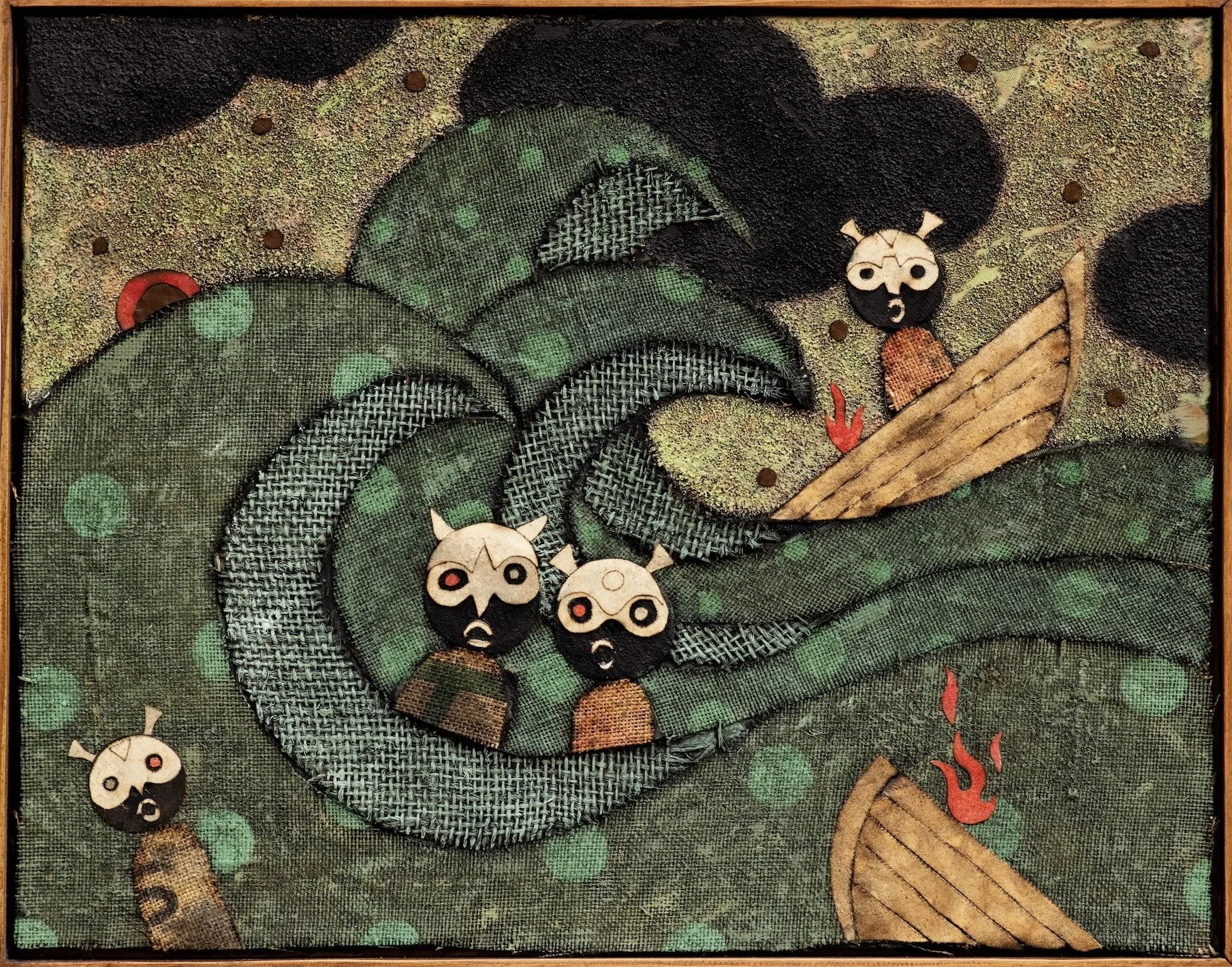
Have You No Decency by Lee T. Edwards
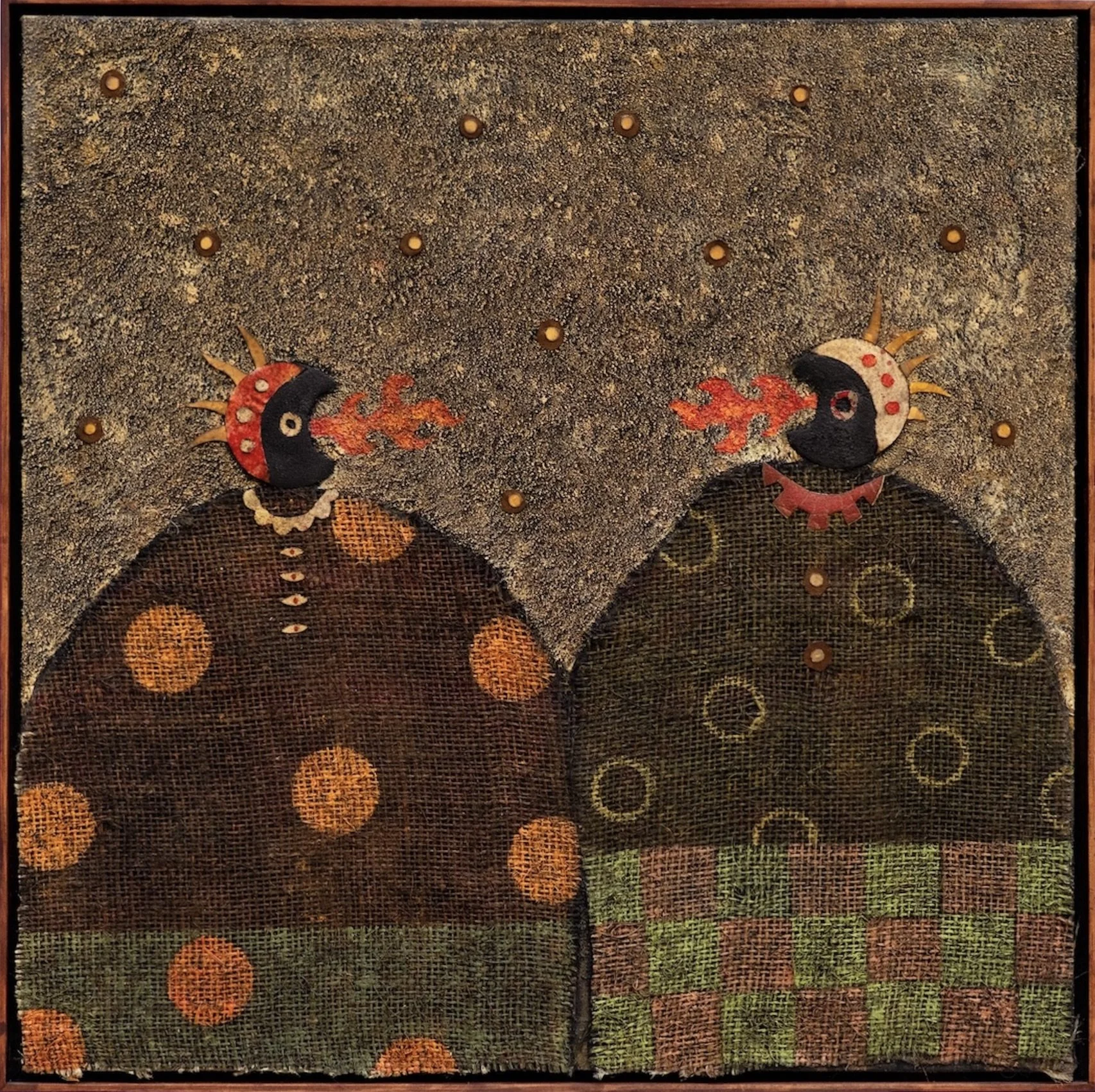


By Lee T. Edwards
Visit artist’s page
—
Burlap, Grinding Discs, Canvas, Acrylic Paint
Size: 22 x 28 x 0.625 in
Framed Size: 23 x 29 x 1.5 in
—
Inquire about this work