Advancing a Creative Future: George Tzougros on Continuing Ken Robinson’s Vision
By Susan McCalmonT
There are few people who’ve shaped the global conversation around creativity and education as profoundly as the late Sir Ken Robinson. Through his writing, lectures, and widely viewed 2006 TED Talk “Do Schools Kill Creativity?”, Ken challenges educators, policymakers, artists, cultural leaders, and more to rethink how imagination is nurtured in schools.
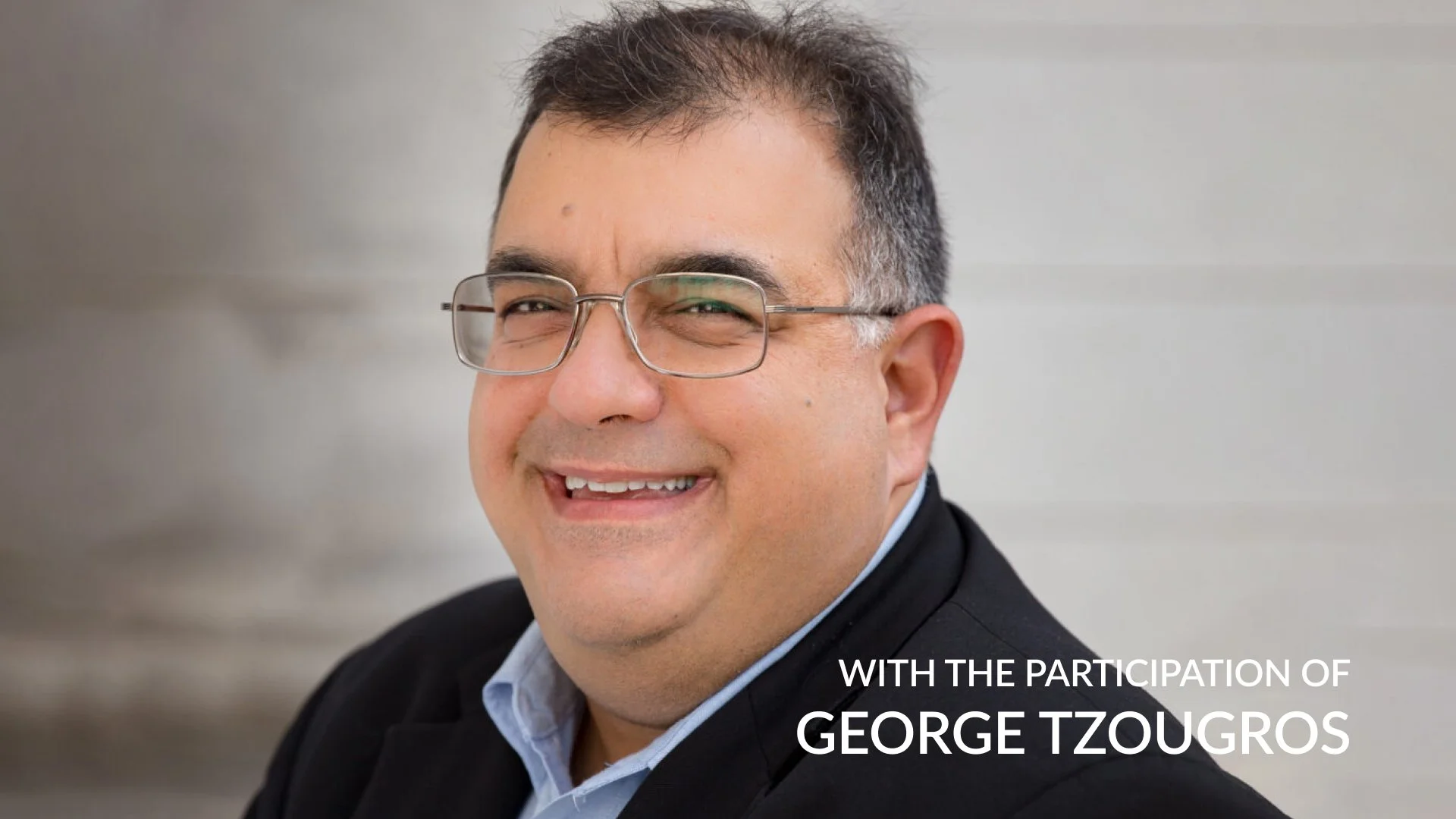
At 1515 Lincoln Gallery, Ken’s ideas resonate deeply with our belief that creativity isn’t only the foundation of artistic expression, but also a vital force shaping society and human potential. I recently had the opportunity to speak to George Tzougros, Director of the Wisconsin Arts Board and Chair of the National Creativity Network. George and I worked closely with Ken and we both remain committed to advancing the ideas that shaped so much of Ken’s work.
During our discussion, George shared how he first discovered Ken’s message, why it continues to resonate across disciplines and cultures, and how organizations can carry forward a vision that places creativity at the center of human development.
First Encounters with Ken Robinson’s Ideas
Like many people, George first discovered Ken Robinson through one of the most influential TED Talks ever delivered. “I was first drawn to Sir Ken’s work through his 2006 TED Talk ‘Do Schools Kill Creativity?’” George shared.
Ken’s message challenged long-held assumptions about education, and the role creativity plays in learning. His ideas quickly gained traction across fields beyond just the arts. George recalled that Ken visited Wisconsin several times, at the invitation of business and biotechnology leaders. Understanding the importance of those visits, George worked to make sure artists and arts organizations had the chance to hear Ken’s message firsthand.
Ken’s influence soon became part of a broader statewide education initiative. “Sir Ken’s work heavily influenced the work of the Wisconsin Task Force on Arts and Creativity in Education,” George explained. In 2008, Wisconsin’s Lieutenant Governor Barbara Lawton and State Superintendent Elizabeth Burmaster created a task force to address the role arts education and creative development play in students’ lives and in shaping future generations, as well as the state’s economy.
When the task force report was released, Ken served as a keynote speaker. I was honored to be a part of that moment as well, sharing about the emerging work of Creative Oklahoma, a non-profit that advocates for the integration of creative thinking across all sectors of Oklahoma’s economy. It was during that time that George and I started a conversation that led to the founding of the National Creativity Network in 2010, a non-profit that supports creative endeavours across North America.
Why Ken Robinson’s Message Resonates Today
Ken’s work reached people across cultures and professions because it reached a fundamental aspect of human potential. “What makes Sir Ken’s message about imagination, creativity, and innovation so powerful is that it centers human beings and the celebration of the human spirit,” George explained.
Ken often emphasized that creativity isn’t limited to the arts. While the arts play an important role in developing creative thinking, creativity exists across every human discipline. “He reminded us that creativity was to be celebrated in the arts, but that the arts did not own creativity. Creativity can be found in all aspects of human life,” George said.
This idea has helped reshape how institutions approach collaboration. Rather than competing for limited resources, Ken’s thinking showed how the arts can partner with science, technology, education, and industry to cultivate innovation across disciplines. “This message is especially important in K-12 education,” George noted.
Moving From Ideas to Action
Through his work with the Wisconsin Arts Board and the National Creativity Network, George continues to translate Ken’s ideas into practical initiatives. As Director of the Wisconsin Arts Board, he helped launch the Wisconsin Science Festival, which was designed to connect scientific discovery with creative expression.
“As director of the Wisconsin Arts Board, I am a co-founder of the Wisconsin Science Festival,” George explained. “In its 16th year, the now week-long, statewide Festival hosts a variety of events that explain the sciences through the arts and the arts through the sciences.”
Ken himself participated in the festival in 2012. “Sir Ken was featured at the 2012 Wisconsin Science Festival. His talk was on the Sunday morning of a Green Bay Packers game and, no surprise, he filled the venue!” George recalled.
Through the National Creativity Network, George works with other advocates to connect people and organizations dedicated to advancing imagination across sectors. “NCN partners with other organizations to advance this work, including Creative Economy Coalition, the Canadian Network of Imagination and Creativity, World Creativity and Innovation Week, and the American Creativity Association-Austin Global,” he explained.
In addition, George curates and distributes the weekly NCN Articles of Interest, a free resource that puts together articles on imagination and creativity across disciplines, including commerce, science, education, and government.
The Challenges Limiting Creativity Today
Despite increased recognition of creativity’s importance, there are still significant challenges limiting it in educational systems and beyond. George acknowledged the many educators who work tirelessly to keep creativity alive in classrooms. “I celebrate the parents, teachers, and administrators who are trying to make creativity a part of the education of the whole child,” he said.
However, many educators face structural limitations. “They are challenged by a system with limited vision and resources, high-stakes standardized tests, current industry workforce needs, and the impacts of artificial intelligence.”
To address these issues, institutions need to recognize creativity as more than an abstract ideal. Creativity enables people to recognize problems and generate solutions, skills that are increasingly essential in our ever-evolving world. “Institutions can respond more effectively by valuing creativity, which allows people to identify problems and create solutions,” George explained.
Preparing the Next Generation of Creativity
When reflecting on the future, George finds the greatest source of optimism to be young people themselves. “Our youth give me the most hope,” he said. “They are open and curious, imaginative and creative, and have access to amazing tools to express themselves.”
Sir Ken Robinson had the same sort of optimism. He believed that a transformation in education was not only possible but already underway. As George reflected, “Sir Ken, too, was hopeful for future generations. He encouraged us to bring on the learning revolution and that the revolution is happening right now!”
For George, the challenge moving forward is ensuring that education systems nurture curiosity and imagination rather than suppress them. “We need to act now to be sure students are taught to be curious and creative to face future challenges and to create and take advantage of future opportunities, he said.
Organizations like the National Creativity Network and creative focused organizations play an important role in making sure these opportunities are available. George emphasized, “It is up to groups like NCN and 1515 Lincoln Gallery to be sure our youth have every opportunity for imagination and creativity.”
As George’s reflections remind us, Ken Robinson’s legacy continues to live on not only in the ideas he pioneered but, in the leaders, and communities he inspired to keep carrying those beliefs forward.
To learn more about the organizations and initiatives discussed in this conversation, I invite you to explore the links below:
National Creativity Network (NCN) – General website
NCN Articles of Interest – Weekly curated articles on imagination and creativity across disciplines (includes posts such as “In Memory of Sir Ken Robinson”)
Wisconsin Science Festival – A statewide celebration of science, creativity, and community
Wisconsin Arts Board – Supporting the arts and creative initiatives across Wisconsin
Follow the National Creativity Network:

