
Where Love Meets Fear: Finding Refuge in Art
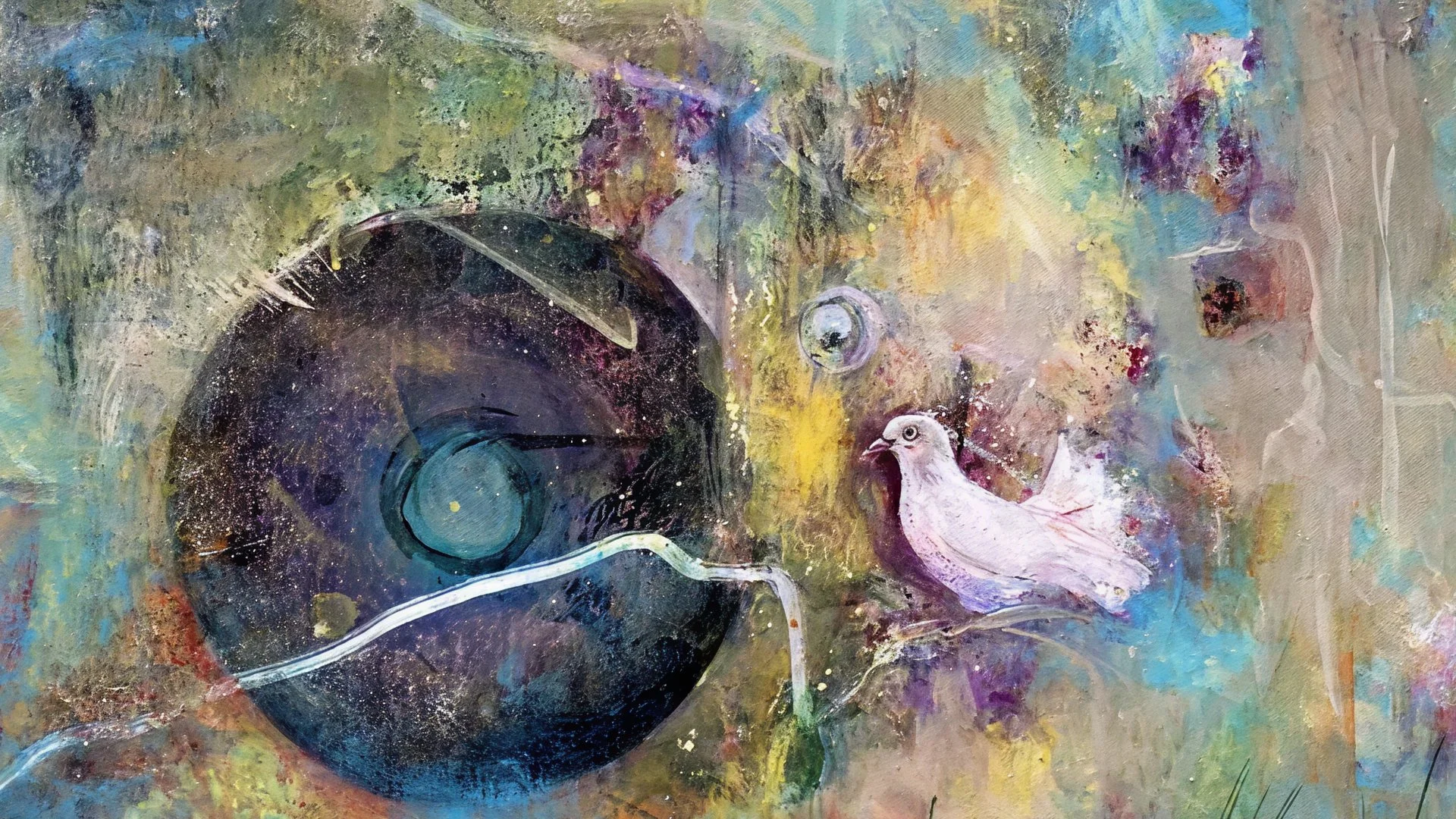
Peace & Love by Dragana Milovic
By Susan McCalmonT
When I think about the current state of the world, I feel it’s shaped by two dominant forces: love and fear. Love is most powerful, but fear is often louder. It’s pervasive in our everyday lives, seeping into every moment. Just look at the media and the constant stream of stories we’re fed focused on division and hostility. Apparently, those are the sorts of stories that sell best, since we rarely see the same attention given to stories about love and kindness.
This reality has consequences. Alongside the fears we absorb collectively, we each carry our own personal fears – fear of failure, fear of loss, fear of not being loved. At times, it can feel like fear is everywhere. Recently, this has led me think about what helps to abate the fear and hostility when those forces feel relentless. I keep returning to how meaningful art is in my life as tangible reminders of our common humanity and the creative power to express love, beauty and goodness.
The Power of Art on the Human
Whether I’m creating art or engaging with someone else’s work, time always seems to stand still. The outside world fades away, and my attention narrows to what’s directly in front of me, softening everything else.
When I’m drawing or painting, my focus becomes the color, line, composition, or form. My entire being is absorbed in creating something that never existed in that space before. In these moments, all distractions lose power. There’s no longer room for fear and anxiety, since my mental and emotional being is fully occupied with creativity.
Research has found that this kind of focus activates the parasympathetic nervous system, which is responsible for rest and regulation. This explains why fear quiets when we’re fully engaged. The body can have a similar experience simply by spending time with art created by others, offering a form of relief.
Creating Spaces That Push Back Against Fear
I believe we can create environments that welcome peace and joy while pushing back against fear and hatred. A common remark I hear at 1515 LG is “This place feels so peaceful.” That’s exactly the goal I had when founding the gallery: to welcome people into a little oasis that engages the senses and offers permission to slow down. Even a brief visit can shift how someone feels and how they carry themselves in the world.
I’ve tried to create the same sense of refuge in my own home by surrounding myself with art that brings happiness and has meaning, often with sentimental attachments. I find that art meets me differently every day, depending on the lighting, my mood, or simply the moment I’m caught in.
Being surrounded by art at home and at work has changed how I notice and respond to fear and negativity, impacting my entire relationship with the world. It serves as a reminder that peace isn’t passive; it's something we can grow and work toward.
Why We Fall in Love with Art
Art speaks to everyone differently, depending on our life experiences. I’m always amazed at how I can walk through a museum or art gallery with a friend and we’re drawn to completely different types of work.
There are moments when art does more than simply pique our interest. When you see a piece, spend time with it, and can’t forget it, that usually means there’s a connection between the creator’s spirit and the person viewing the work. Sometimes, the connection is easy to identify, whether it’s a place, color, or memory. But other times it’s not so obvious, and part of the beauty is the mystery.
I see this all the time at the gallery. We have people who come just to “visit” a piece. Sometimes they feel so moved by the art that they end up purchasing it to have at home. I encourage people to find ways to bring art into their lives that speaks to them and sparks joy. When navigating a world filled with so much uncertainty, small efforts like this to curate our spaces can create the most meaningful change in our daily lives.
The Power of Slow Looking
Art can become a refuge when you give it time. Even a few minutes of creativity or appreciating someone else’s work can make a huge difference. Research supports what many of us intuitively feel. A 2016 study published in Art Therapy found that making art for at least 45 minutes can significantly lower cortisol levels, the hormone most closely associated with stress, regardless of prior artistic experience.
Research shows that the average gallery-goer spends less than 10 seconds with each work of art, which is why many art enthusiasts encourage slow looking. This practice encourages viewers to stay with art a little longer than usual – five minutes, 15 minutes, or even longer – just enough to slow down and appreciate smaller details, such as textures and colors. When we do this, our attention deepens and our nervous system settles, loosening fear’s grip. We’re suddenly no longer giving negativity space. It’s not that fear and anxiety completely disappear, but rather that by focusing our attention elsewhere, we give our body and mind the opportunity to regulate.
It’s no wonder art therapy is such a powerful tool for processing emotions that can be difficult to put into words. Rather than displacing or distracting us from our feelings, art gives us a place to land and work through the world’s burdens.
Using Art to Meet Fear with Love
Art can’t remove fear from our lives, but it can help us meet negativity with love and compassion. When we engage with art, whether by creating or appreciating it, we connect with something made with care. That connection grounds us by reminding us of the humanity we share and giving us the courage to keep going.
My hope for readers is that you’ll allow yourselves to spend more time with art, whether in a gallery, at home, or wherever you encounter it. Not to escape the world, but to stay open to it. Sometimes, the simple act of attention is enough to restore balance and keep us steady. I invite you to visit 1515 Lincoln Gallery and see for yourself how art fosters an unforgettable connection and a lasting, restorative impact.

